AMEC 2024 Year in Review: Accomplishments in Marine Energy Research and New Initiatives for 2025
2024 was another busy year for AMEC, as we made significant progress in marine energy research and development, educational initiatives, and strategic partnerships.
Major Funding for Continued Research
AMEC's vision for advancing marine energy has received a substantial boost through various funding awards. AMEC has secured approval to continue Budget Period 2, extending the implementation period until June 2027 and allowing access to the remaining $10 million of its initial funding. Additionally, AMEC has been awarded $1.118 million for its operations and a significant $12.175 million under the Bipartisan Infrastructure Law (BIL), also known as the Infrastructure Investment and Jobs Act (IIJA).
Furthermore, AMEC-affiliated universities were selected for seven awards totaling $5.36 million, awarded under the University R&D FOA through the DOE Water Power Technologies Office. AMEC will collaborate with these universities to provide a National Marine Energy Center (NMEC) perspective on implementation and offer technical expertise and access to AMEC facilities as needed.
Research Across AMEC Universities
AMEC's research portfolio now includes 13 research tasks, 7 program tasks, and 2 infrastructure tasks funded initially, along with 12 additional research tasks, 4 program tasks, and 1 infrastructure task funded through the IIJA. We have made remarkable progress this year on our initially funded projects: 75% of Budget Period 2 deliverables and milestones are either initiated or in development, and 10% have been completed. Noteworthy achievements include:
At the University of New Hampshire (UNH), researchers conducted a techno-economic analysis of using AMEC’s wave-powered water pump in aquaculture, correlating cost analysis with increased yield under environmental conditions measured year-round at the UNH offshore test site in the Gulf of Maine.
Lehigh University (LU) developed an innovative, application-agnostic framework for modeling uncertainty in decision-making processes, specifically targeting supply chain optimization challenges within the marine energy sector.
Stony Brook University (SBU) has enhanced its Virtual Flow Simulator (VFS) code, improving its capabilities for simulating large-scale estuarine and oceanic environments. Their research includes investigating the effects of submerged woody debris on marine turbines, yielding valuable insights about power output and environmental impacts.
The Coastal Studies Institute (CSI) has engaged with stakeholders, gathering insights on the marine energy sector through its network. The team is developing methods to involve stakeholders and integrate their insights into AMEC's strategy and activities.
Most tasks within the IIJA scope have been initiated, with the greatest progress on Tasks 1 and 2: Marine Energy Short Course Development and Strategy Development.
Partnerships and Collaborations
AMEC's commitment to advancing marine energy research is strengthened through strategic collaborations. A partnership with the National Renewable Energy Laboratory (NREL) includes the deployment of the Hydraulic and Electric Reverse Osmosis (HERO) Wave Energy Converter at Jeannette's Pier in March 2024. This project aims to harness ocean wave energy for water desalination.
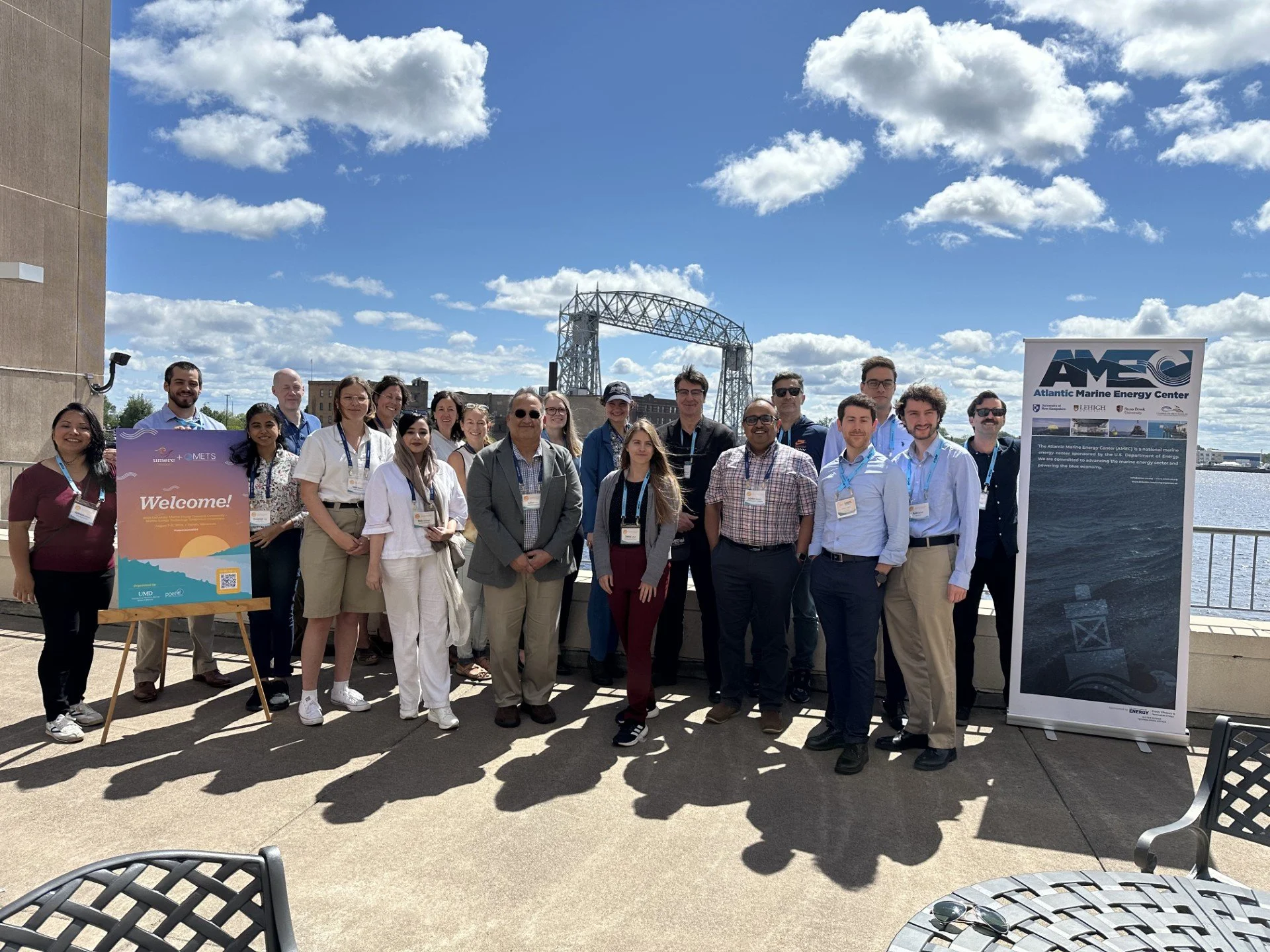
AMEC participants to the 2024 UMERC conference in Duluth, MN, August 2024
AMEC's active participation in the annual University Marine Energy Research Community (UMERC) has yielded impressive results. Eight research papers are slated for publication in a special edition of the Renewable Energy journal. These publications cover diverse themes, ranging from wave-powered water pumps for aquaculture to detailed analyses of tidal stream turbine wake evolution. Click here for the full list of publications. Some of the published papers include:
Wave-powered water pump: Artificial Upwelling for the aquaculture industry, by Chelsea Kimball et al. (UNH)
Potential hydrodynamic effects and power production impacts of submerged debris on a marine hydrokinetic turbine located in a riverine environment, by Mustafa Aksen et al. (SBU)
Near wake evolution in tidal stream turbine wake due to asymmetric sheared turbulent inflow with different integral length scales, by Cong Han and Arindam Banerjee (LU).
Another partnership is with Testing & Expertise for Marine Energy Resources (TEAMER), which provides technical assistance to accelerate technology development in marine energy. AMEC continues to serve on TEAMER's technical board. In November, we held a webinar encouraging AMEC researchers to apply for TEAMER funds. AMEC hosts two TEAMER facilities: the Chase Lab tow and wave tank at UNH and Jeannette's Pier at the Outer Banks of North Carolina.
Educational Leadership and Community Engagement
Chelsea Kimball's hands-on exhibit at the University of New Hampshire's Ocean Discovery Day event on October 4-5 in Durham, NH
AMEC demonstrates its commitment to educational leadership and community engagement through participation in events like Ocean Discovery Day at UNH. This event attracted 2,300 middle school students and local community members, highlighting our efforts to foster interest in marine energy among K-12 students. It shows our dedication to involving the community in our mission.
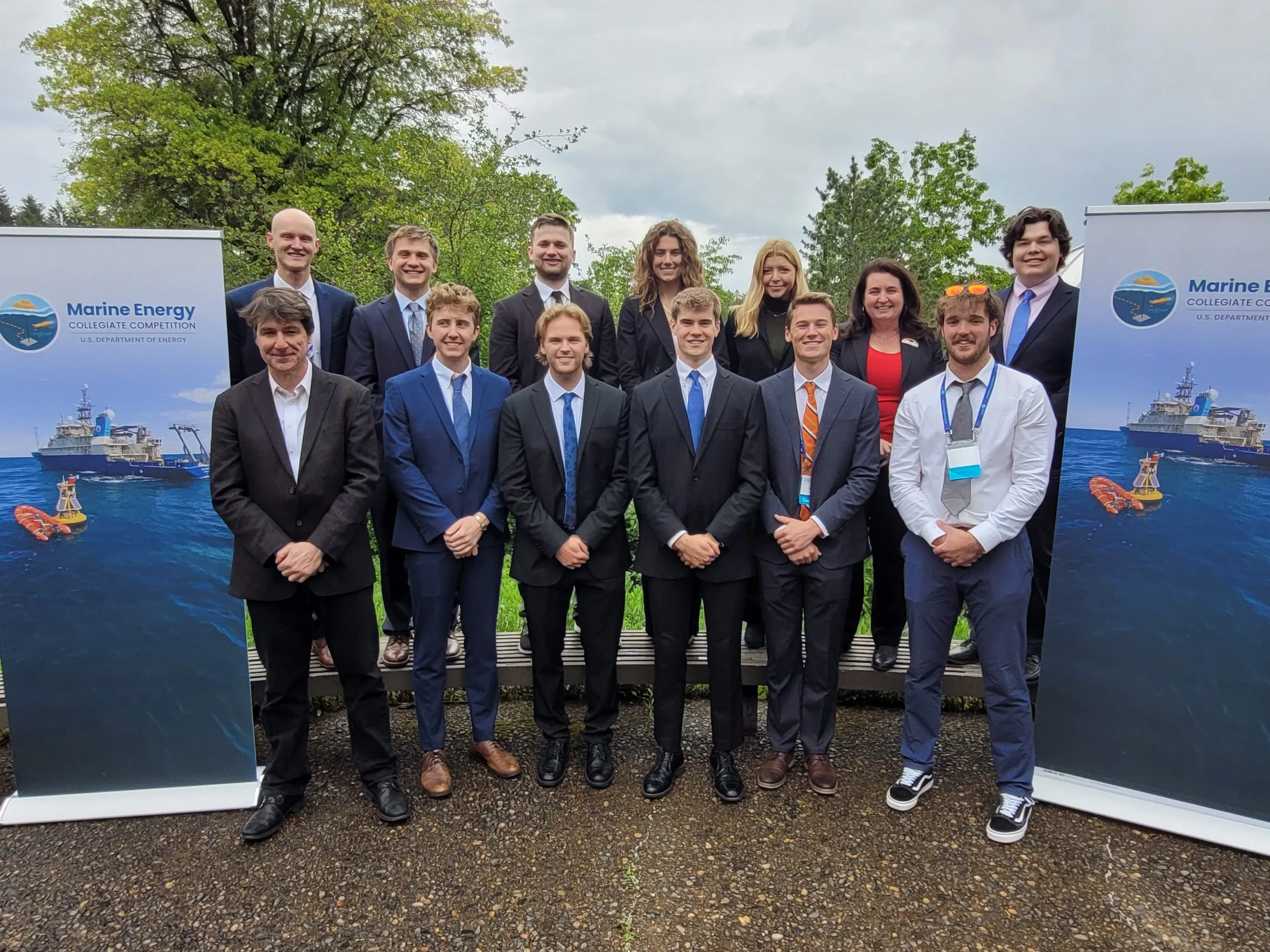
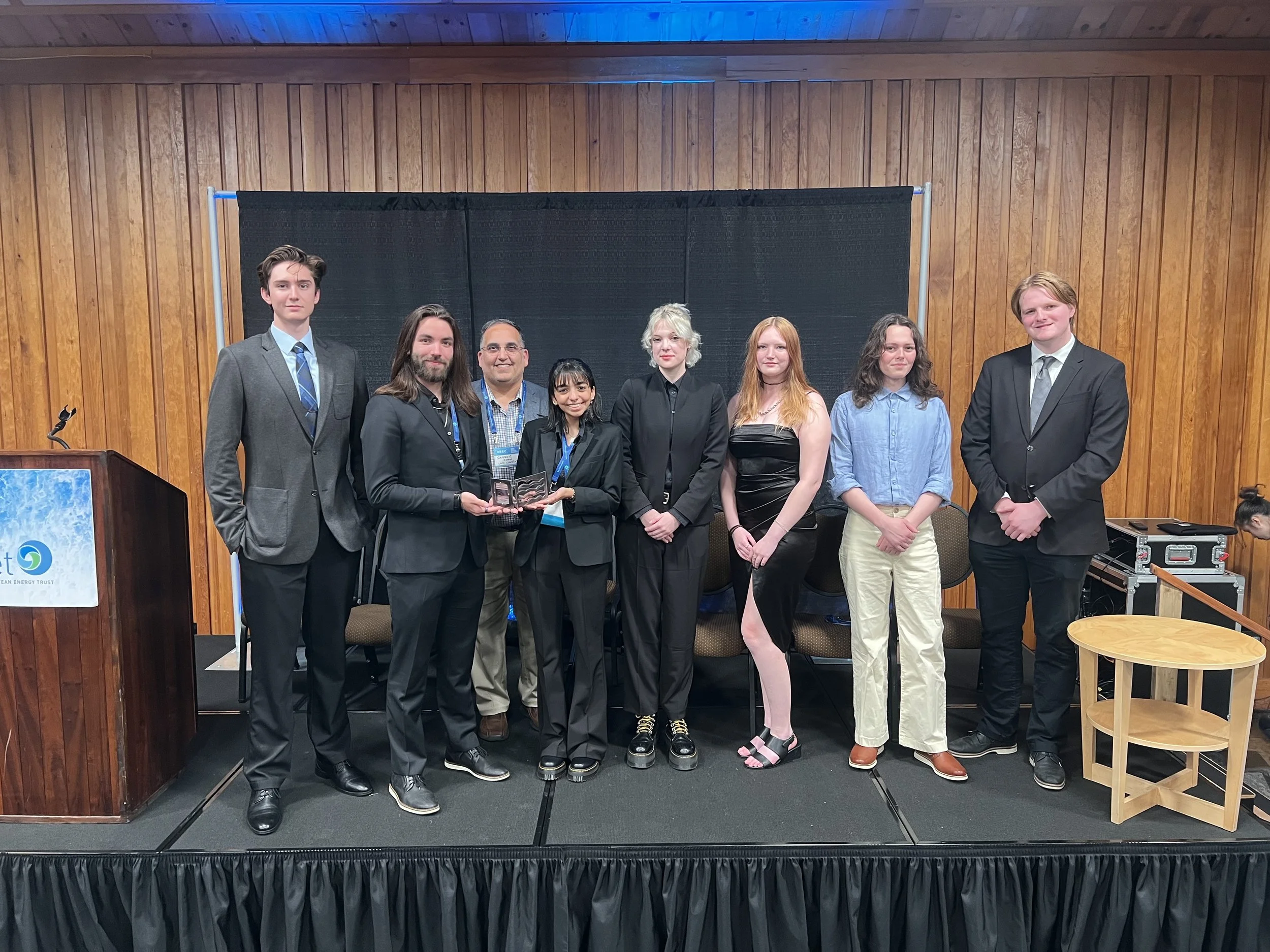
UNH 2024 MECC team (top) and UNC 2024 MECC team (bottom)
AMEC universities led two Marine Energy Collegiate Competition (MECC) teams in the national competition of interdisciplinary undergraduate and graduate students to offer solutions to the growing marine energy industry. The University of New Hampshire MECC team won Overall Winner, Best Technical Design, and Best Business Plan, while the University of North Carolina at Charlotte won the Rising Star award in the MECC 2024 in Portland, Oregon. This year, teams from both universities are competing again in MECC 2025.
In August 2025, AMEC will host a short course titled "Introduction to Marine Energy" in Durham, New Hampshire. This program will combine lectures with hands-on laboratory activities and simulations, equipping participants with a strong understanding of marine energy and its applications. It offers an opportunity to engage with AMEC faculty and marine energy professionals.
Looking Forward
As AMEC refines its strategic approach and expands its research mandate, the center is at the forefront of marine energy innovation. With the completion of Budget Period 1 tasks and strong momentum in Budget Period 2 and IIJA tasks, AMEC is well-equipped to drive advancements in marine energy research and technology development.
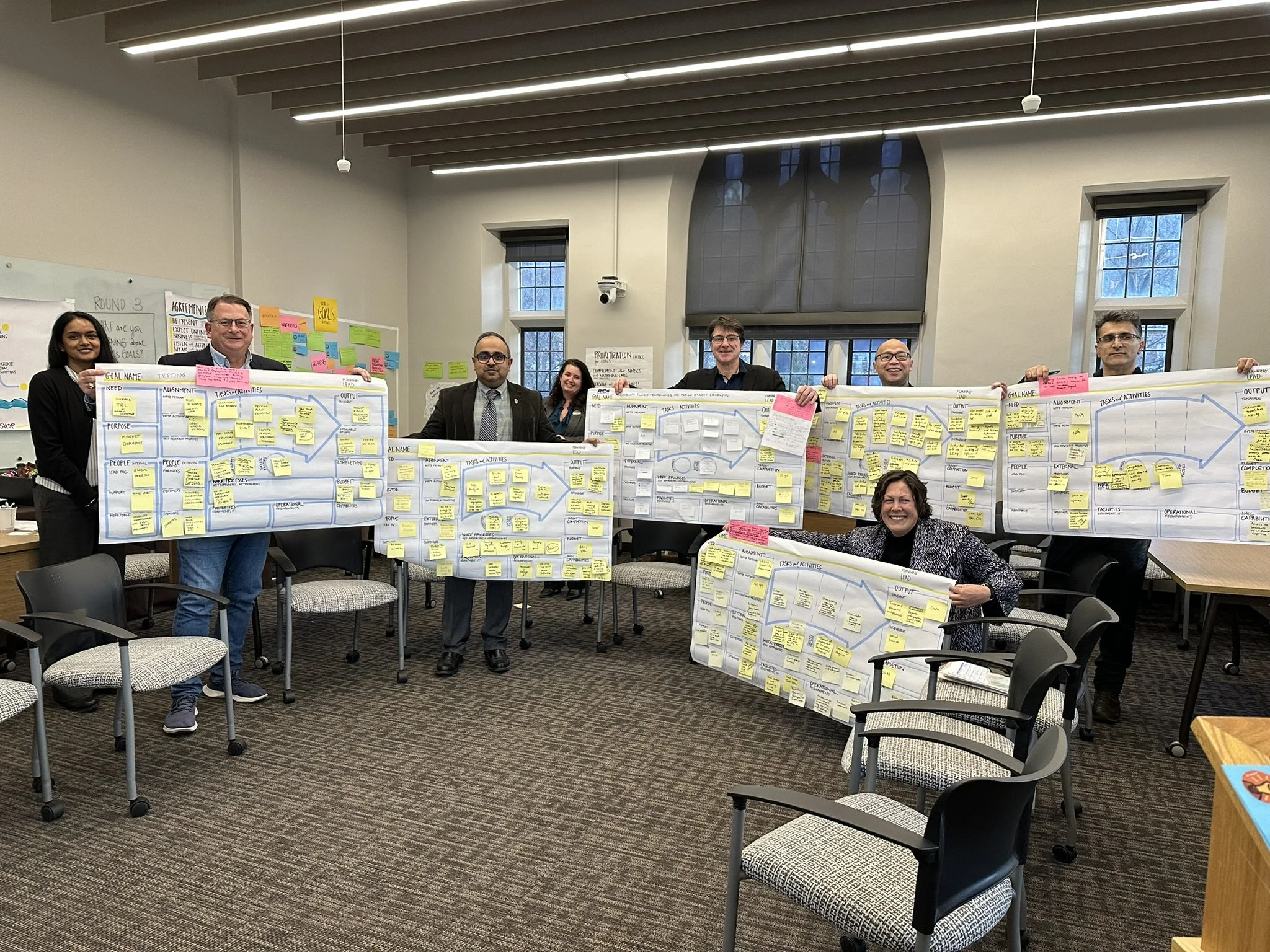
AMEC Board of Directors at the AMEC’s strategy development workshop at Lehigh University on January 13, 2025
On January 13, 2025, the AMEC Board of Directors met in person at Lehigh University, PA. They have taken steps to refine their strategic plan for the next decade, emphasizing the integration of advancements in the marine energy sector. This approach aims to position the organization as a leader in this evolving field.
The combination of funding, research progress, strategic partnerships, and educational initiatives illustrates AMEC's comprehensive approach to advancing the marine energy sector. As we enter 2025, AMEC will continue to bridge the gap between research and practical applications, promising exciting developments in the future of marine energy.